Showing posts with label the Space Between. Show all posts

Wednesday, February 28, 2007

Jieon Lee

...the Space Between... Artist Profile.

Jieon Lee is no stranger to the Central Coast, having performed at the Dawn Light Symposium in 2005. She now makes her home at Mangrove Mountain.
The work performed at the Body Fuel café, The Space Between Words, is the first step in a series of works which will constitute her current project, at the Still Point, which is partly funded by the Korean Culture Foundation. The title is a quote from T.S.Eliot “at the still point, there the dance is”. Further performances in the series will take place at a number of locations in Australia and overseas.

The Space Between Words, on the 18th of February, was the first articulation in a conversation; a dialogue between silence and the word, between breathing and speech, between mind and embodiment, social process and immanence.

Monday, February 26, 2007

Park, Byoung-Uk

...the Space Between... Artist Profile.

Park, Byoung-Uk has a long and passionate commitment to a form of socially engaged art practice which is performative, interventionist and premised on positive change. As the director of the annual Nine Dragon Heads Symposium in Korea, his organisation of the event is an extension of his art practice.
The social form and dynamic of NDH has its own aesthetic attributes and also acts as a catalyst for further artist generated projects.
Nine artists associated with the Gosford area have participated in Korea, and Park, Byoung-Uk joined us here for the Dawn Light Symposium in 2005.


Space Between text:
Encumbered Bush Walk.

Ye Shufang

...The Space between... Artist profile.

"Ye Shufang is interested in issues of the ephemeral, the ‘ready-made’ and aspects of collaboration and interaction. Her site-specific installation works have been exhibited in solo exhibitions in Belgrade, Yogyakarta and Singapore; and in group exhibitions in Venice, Stockholm, Beijing, Oslo, Korea and Singapore. Most recently, she created an on-site installation for the Singapore Pavilion at the World Expo 2005 in Nagoya, Japan."
There is always a feeling of generosity, celebration and affection in her projects that draw attention to the rituals and meaning of preparing food for others. An example being PROJECT - RECIPE BOX (mothers disguised as recipes disguised as art) A Collaborative Project for Women/Beyond Borders, Singapore 2001.

About the work for …The Space Between…:
Title : Love, Romance and other Recipes for Happily-Ever-After. Part 2, 2007
This recipe, Happily-Ever-After Wedding Cake, together with 6 other wedding cake recipes and a 9-tier wedding cake-topper installation is currently on exhibition at the Singapore Art Museum.

the Space Between text: Happily-Ever-After Wedding Cake

Ingredients :
- 2 pcs. 12x1 inch round baking pans
- 2 pcs. 10x2 inch round baking pans
- 2 pcs. 8x2 inch round baking pans
- 2 pcs. 6x2 inch round baking pans
- 10 white cake mixes (Each mix would fill a 13-x-9-inch pan)
- Champagne
- 2,1/2 recipes Royal Icing
- 13,1/2 inch round wooden board
- 10 inch round pieces of 1/4 inch thick clear plexiglas
- 8 inch round pieces of 1/4 inch thick clear plexiglas
- 6 inch round pieces of 1/4 inch thick clear plexiglas
- 1 recipe Hazelnut Buttercream
- 6 recipes Creamy White Frosting
- 6 pcs. 24 ounce packages fondant
- Large decorating bag fitted with Coupler, #18 and #21 Star tips, and #2 Writing tip
- Edible Pearl dragees
- 12 pcs. white plastic dowels
- Swan cake topper

Instructions :
1. Prepare cake mixes one or two at a time, according to package directions, substituting champagne for the water.
2. For bottom tier, divide 4 mixes between two 12 inch baking pans.
3. For next tier, divide 2_ mixes between two 10 inch baking pans (use remaining batter for cupcakes).
4. For next tier, divide 2 mixes between two 8 inch pans.
5. For top tier, divide 1 mix between two 6 inch pans.
6. Bake 12 inch and 10 inch cakes in a 325∞F oven for 55 to 65 minutes.
7. Bake 8 inch cakes in a 325∞F oven for 50 to 60 minutes.
8. Bake 6 inch cakes in a 325∞F oven for 45 to 55 minutes.
9. Cool, wrap, and freeze each layer.
10.At least two days before decorating the cake, prepare the letters H, E, and A.
11. Make a computer printout in letters 1,1/4 inches tall.
12. Place waxed paper over the prints and pipe the letters onto the waxed paper using Royal Icing and a #2 Writing tip.
13. Let dry.
14.To assemble tiers, stack 12 inch cakes on the wooden board, lightly spreading Hazelnut Buttercream between cakes.
15. Repeat with remaining tiers, stacking on plexiglass pieces.
16. Frost sides and tops of all tiers with Creamy White Frosting.
17. Apply fondant to top and sides of each tier.
18. To decorate, divide the 12 inch tier into eight sections and the 6 inch tier into four sections.
19. Pipe a C scroll in each section using a #18 star tip.
20. While the icing is still soft, add Pearl dragees.
21. Decorate other layers with a shell border and Pearl dragees.
22. Insert plastic dowels into the bottom three tiers to support the stacks.
23. Stack tiers on-site.
24. Apply "Happily Ever After" to the top three tiers with Royal Icing using premade H, E, and A letters.
25. Pipe the remaining letters with the writing tip.
26. Pipe a border at the base of each tier using Royal Icing and a #21 star tip; add Pearl dragees as desired.
27. Place the swan on top of the cake.

Sunday, February 25, 2007

Ali Bramwell

...the Space between... Artist Profile.


Ali Bramwell and her work speak for themselves. Sometimes quirky or humourous in its use of the ordinary materials of life, her work always has a strong conceptual foundation and edginess.

Ali is Director of the Blue Oyster Gallery in Dunedin and was a participant in the Dawn Light Symposium. In fact the concepts behind the symposium emerged in conversations with Ali and other artists during exhibitions in Bosnia and Korea.
Like all of the artists in…the Space Between…, Ali approaches her work with engagement and a sense of responsibility for the development of practice. Apart from being an artist and working in arts admin., she lectures and organizes projects, such as Terminus in 2005.


the Space Between text:
Twilight -das dunkel werden- finisternis kommt langsam in den suden.
twilight comes slowly in the south.

Gradweise wird das tages- licht flacher und undeutlich.
Gradually the light flattens and dims.

Wie die schatten sie werden weicher und verlangern sich
Shadows soften and gently extend,

- wie das licht dass ihnen scharfe gibt und langsam verschwindet.
as the light that holds them sharply in begins to dissipate.

Zu dieser zeit horche ich mit meinem ganzen korper
At this time I listen with my whole body

und mein haut zitterert mit der absicht zu sehen.
and my skin prickles with the attempt to see.

Warum verankert ein schatten einen gegenstand im boden?
Why does a shadow anchor a thing to the ground?

Am abend, wenn das letzte licht sich rom schatten befrieght und sich frei bewegt beleuchtet aber nicht langer beschreibend.
In the evening; as the last light comes loose from surfaces and hangs briefly unattached, illuminating still but no longer describing,

Ich be finde mich selber auf der suche nach gewissheit das was ich neulich sorglos gefunden habe.
I find myself searching for the knowledge that I have so recently navigated carelessly.

Meine fusse erzahlen mir dass der boden immer noch da ist,
My feet tell me that the ground at least is where I saw it last,

wo ich ihn zulezt gesehen habe - aber dinge die ich glaubte verstanden zu haben, haben auf seltsame weise ihre fulle und ausdehnung verloren.
but things I thought I undestood have somehow lost their mass and gravity along with their shadow.

Distingtionen wenn klar beleuchtet, haben ihre bedeutung verloren.

Distinctions so clearly seen when brightly lit are unravelling.

Ich bin mir nicht langer sicher, vielleicht liege ich falsch.
I am no longer sure, perhaps I am wrong.

Saturday, February 24, 2007

Ichi Ikeda

...the Space Between...Artist Profile

To appreciate Ichi Ikeda’s long commitment to water issues and the scale of his work, please have a look at his website.
We enjoyed his work at the Dawn Light Symposium; his company and conversation.
His enthusiasm for networking and mutuality, which we share, is evidenced by his joining us for …the Space Between… and the text he wrote for Gosford.

the Space Between text:

The Chapter of the United Waters
---------------------
We the Peoples are to recall our memories of places
through water which has been circulating all over the earth,
and at the same time, to draw our attention to the fact
that our body has also been letting in and out water
for so many generations.
---------------------
We the Peoples are to realize why Water,
that is so full of life to us, is our medium
for moving the borders, in everyday customs,
histories, various cultures and so forth,
simplifying to a profound exchange between
human being and human being.
---------------------
We the Peoples are to be born on the earth,
caressed in a cradle of water
and growing as it grows.
All lives live in harmony.
The rivers flow to fertility
and the soil rises to evergreen.

Liz Coats

...the Space Between... Artist profile

Liz Coats, now living in New Zealand, has been an important figure in abstract painting, both in Australia and across the Tasman. Besides having an almost obsessive (in the best sense) dedication to her craft, her playful curiosity and generosity have led her into many escapades beyond the canvass.
She was an active member of the Synapse Art Initiates crew in their various ventures, including Ecopoetics at Somersby. She was recently at Gosford for the Dawn Light Symposium (2005)


Untitled. 2007

the Space between text:

plants grow

birds nest

we can exist

without interference

Friday, February 23, 2007

Susan Hillman a.k.a Ruby Red

...the Space Between... Artist profile.

Susan Hillman a.k.a. Ruby Red was a co-founder of the The Texicanos in 2000. Their new CD “Southern Exposure” promotes a genuine heartfelt American/Border sound through both original and traditional songs chosen for this album. Reviewed in ‘Le Cri Du Coyote’, France, March 2006.
“So ........ on the off-chance you come across anyone interested in Alternate Country/Western Swing music please put them in touch with our CD, or me personally.”
Susan Hillman. rubyred05@gmail.com

Her ongoing installation, CamoSweaters, at The Royal Canadian Legion Branch 150, is dedicated to Canadian soldiers killed in Afghanistan 2002-2007.


...the Space Between text:
"...... CAMOUFLAGE / EGALFUOMAC ...... EYE SEA EWE / ?EM DAER UOY OD ...
... YOU CAN RUN / EDIH T'NAC UOY TUB ...... SMOKE & SRORRIM ....
.. ART / RAW / ART / RAW / ART ......"

Thursday, February 22, 2007

The Space Between Words


The Space Between Words
The empty streets last Sunday night in Gosford CBD.

If you were passing, you might have noticed LED light signs in the Body Fuel Cafe illuminating a performance by internationally known Korean dancer Jieon Lee. Later, a customer, the Comma Man, made a brief visit. Outside, Sharyn Walker read in silence while a gun-fight was filmed, Betty Saez, gagged, sat writing outside a bridal shop and Jenny Brown peddled nature to the natives. Passersby (with their dog) were persuaded by Judy Harris to participate in an impromptu bus stop moment, while further up the deserted street, a dragon danced outside the Chinese restaurant with drums and symbols for the start of the Year of the Pig.

Here are a few more pictures.
Jieon Lee

Comma man

Eric and the Kid

Jenny Brown and Client

Betty Saez

Jieon Lee and Sharyn Walker

Thank You Vicky and the Body Fuel Cafe.


Thanks also to SALIENT SIGNS

Saturday, February 17, 2007

…the Space between…
Artists whose texts have been displayed in Mann Street February 12-16
Texts were written or selected by the participants.
International: Susan Hillman, Canada. Sakiko Yamaoka, Japan. Ali Bramwell, New Zealand. Park, Byoung-Uk, Korea. Ichi Ikeda, Japan. Ye Shufang, Singapore. Liz Coats, New Zealand.
Local: (Reading Room group) Liz Wright, Judy Harris, Fiona Doyle, Sharyn Walker, Betty Saez, Neil Berecry-Brown and Juliet Fowler-Smith; with contributions from Jenny Brown, Kiera O'Toole, Kimberley Connor, Josephina Laina and W.R. Boyd.

Participating Gosford Businesses:
Signs.

Raine and Horne Real Estate, Bridgecoast Finance, Advance Travel, Leading Labels Outlet, Imperial Centre, Sheridan Factory Outlet, Danamade Bridal and Formals.


Dance/tableau/ The space between words.
Body Fuel café. (Scheduled for the 18th)

Appreciated help from:
David Humphries: CBD coordinator. Gosford District Chamber of Commerce and Industry.
SALIENT SIGNS

Saturday, February 03, 2007

A quick response to Jillian’s comment on “Elections” post.
Rather than adding to the comments, I am sending this to the Back Page as a “post”, as it addresses questions beyond those in the original, and the issues seem relevant to a few conversations at the moment.
Recently I was asked why ...the Space Between… was to take place in Mann Street and not at Erina shopping mall “where the people are”. The question raised issues that will be examined in the course of the project, but what I forgot to say upfront was that Erina is private space, Mann Street is public and civic space that includes private uses.
One of the problems with the closing of “Changeling” was that there was a perception that The Gosford Regional Gallery was being treated more as a private space, controlled by individuals unknown (certainly not “us”). I suspect that if Qantas was still owned by the Government (“us”) it would not be so easily banning passengers wearing T-shirts with anti-establishment motifs.
Allen Jasson & T shirt.
The more we sell off the commons – privatise those institutions previously held as public (our “commonwealth”), the greater would seem to be the need for public venues where there can be free and fearless expression of all views. In such circumstances artists can examine through their work our common human condition; our motives, politics, emotions etc.; what it means to be who we think we are, and what is demanded of us if we want to act with responsibility and compassion.
Oppression grows from ignorance, and ignorance is promoted by oppressive regimes – censorship ensures ignorance. We even have a government in Canberra that maintains power by manipulating its own ignorance (babies overboard, weapons of mass destruction, AWB & food for oil).
I do not want to coach politician’s responses to the “Election” post questions, but art culture always has been inextricably part of Enlightenment humanitarian discourse, and, for me, strengthening its role as an arena, an intellectual commons, free from the shackles of ignorance and censorship is vital in an increasingly privatised world.
Jillian, you call for explanations about the Gallery closing. I believe that eO will be writing to Gosford Council with some pertinent questions. I hope we will be able to have their responses on the Back Page.
Neil.

Tuesday, January 30, 2007

Sakiko Yamaoka

...the Space Between... - artist profile.

The photo.
the title is "Listen! Directly",
the audience, 12 people were listening neighbor's heart beat.
Before they were on the stage, They translated the neighbor's heart
beat they listened to 12 metronome.
On the moment to take the picture, on the stage 12 different beat
sounds were echoing.
2003 , in Germany

Sakiko Yamaoka
(Edited by backPage - 26th Feb. Sakiko's impressive CV of international events and exhibitions was removed to make way for her text which we wanted to post in full.)

About projects and works.
Please see the websites (sorry mostly in Japanese text)

Space between text:


No name

I am very stupid. I always forget things. I just stand.
I just listen.

I love to look at the sky very much.
I love to listen to the various sounds from around the world.
Most of them don't have any name.
The sky above Japan is the same as the sky above Australia.
No name.
When some apples fall down, they make a sound on the ground.
Each occasion has a different sound. But it has no name.
It is just sound when apples fall.
Too many different sounds, nobody can name them.
Above all those sounds are not necessary in human society.

Do you know my smell? Ignore my name.

I just move to listen to the sounds from the world.
It is not be easy. Like torture.
Because the sound comes from the world. but really from me.
Only when I act, the world makes sound. Like echo.
It means I neverÅcÅc?
But sound is very wonderful. Hope to let me say it is lovely.

Please come to smell me. Ignore the sound.

Once I went out of my door,
I was very surprised by a sound I had never listened.
"!"
I found a dead cicada on the ground near my foot.
I have never imagined a cicada has weight to make sound.
I have known cicadas.
I had seen them; I had read information about them from books,
I had listened to the sound they make on the tree.
But I found I saw it is the first time to see that dead cicada.
I picked up the cicada, and I realized he was very light.
And I smelled him carefully to know him.

the Space Between

Reading Room Project
…the Space Between…

A project for the heart of Gosford’s CBD by Brown’s Cows Art Projects.


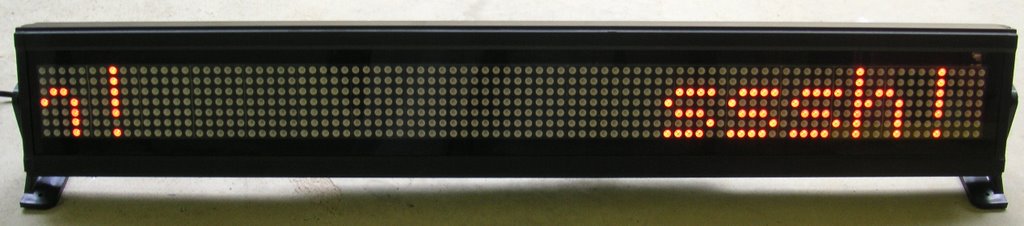
In the week beginning the 12th of February, 2007, an assortment of L.E.D. moving text messages will be displayed in selected shop-front windows in Mann Street (between Erina and William Streets), Gosford, NSW.

The messages have been devised by artists in Gosford, with contributions from Japan, Singapore, New Zealand, Canada and Korea.

A short dance-tableau “The space Between Words” will occur one evening inside a shop widow, with improvised activities perhaps occurring elsewhere in the street. [This will be recorded for later presentation and is not intended as a public performance. It is part of a series of events, “@ the Still Point”, funded in part by the Korean Cultural Foundation.]

Mann Street is a local site of constructed and contested meaning. …the Space Between…is a project playing with different ways of thinking about public (commons) space, art and language. Locally articulated, globally reticulated.

The project will be fully documented and given press coverage as well as website distribution. A DVD of the week’s activities will be produced.

Profiles of some of the artists will be posted when they are received.

Tuesday, January 16, 2007

Art without moving your lips


[Art's] voice owes its power to the fact that it arises from a pregnant solitude [silence].
(Malraux).

“… silence encloses all things, including speech, or language, or discourse, or any form of expression.
Art is thus essentially a grammar or rhetoric of silence…”
(Caranfa in reference to Saint Augustine).


In art any distinction between language, philosophy and art is blurred, for all three are manifestations of the invisible in the visible, of the unknowable in the knowable and of silence in discourse.
(Merleau-Ponty)

Silence silences what we think we know, it teaches us to listen – in an integral way.
It promotes an encounter with the “other’ or oneself as another (Ricoeur).

“what we know is more than we can tell and we can tell nothing without relying on our awareness of things we might not be able to tell (Polanyi)


Knowing is ultimately unknowing … and discourse is the voices of silence.

The voices of art are the voices of silence – or the silenced, or the unspeakable, or the unspoken.
Art is silence coming into being or articulation – things said without breaking the silence.
(Merleau-Ponty)


This post references liberally from:
Voices of Silence in Pedagogy: Art, Writing and Self-Encounter.
Angelo Caranfa.

Thursday, January 04, 2007

Aesthetics of Silence (1967)


The exemplary modern artist's choice of silence isn't often carried to this point of final simplification, so that he becomes literally silent. More typically, he continues speaking, but in a manner that his audience can't hear. Most valuable art in our time has been experienced by audiences as a move into silence (or unintelligibility or invisibility or inaudibility); a dismantling of the artist's competence, his responsible sense of vocation — and therefore as an aggression against them.
Modern art's chronic habit of displeasing, provoking, or frustrating its audience can be regarded as a limited, vicarious participation in the ideal of silence which has been elevated as a prime standard of seriousness in the contemporary scene.
But it is also a contradictory form of participation in the ideal of silence. It's contradictory not only because the artist still continues making works of art, but also because the isolation of the work from its audience never lasts. With the passage of time and the intervention of newer, more difficult works, the artist's transgression becomes ingratiating, eventually legitimate. Goethe accused Kleist of having written his plays for an "invisible theatre." But in time the invisible theatre becomes "visible" The ugly and discordant and senseless become "beautiful." The history of art is a sequence of successful transgressions.
Susan Sontag.
The Aesthetics of Silence. 1967.

Tuesday, December 05, 2006

Text Art as Public Space

If art is a culturally, historically and theoretically constructed concept, constantly changing – what the general community understands as being art is probably what artists were concerned about, in an emerging way, 10 years ago, and was an unknown concept two hundred years before that.

We come to know and identify art through language. Things and actions can exist, but they need language to transform them into art. It is written text more than image or object that defines what we regard as art.
As Dave Beech writes in Words and Objects After Conceptualism, “The illusion of art’s independence from language in general and ‘supporting’ texts in particular is finally put to bed by Conceptualism.”

“Art objects are inert without their texts…..Similarly, art objects without texts are impossible, but there is no good reason to exclude the opposite. Text is a condition of possibility for art but there is no logical incoherence in an art of texts without inert art objects.
Conceptualism’s insertion of text into the field of the art object – of presenting text as art – has destabilised the customary distinction between art objects and the various texts that accompany, frame, explain, promote and name them. That is to say, the normative idea that the artwork should ‘speak for itself’ can no longer be sustained after the historical emergence as art of the catalogue, the magazine ad, the private view card, the essay, the slide talk and so on –
strictly speaking, it never could. It was not so much that Conceptualism elevated text to the status of art, exactly. The significant transformation here is how Conceptualism pressed art up against the institutional, historical and social conditions of art, including the linguistic conditions for art, without which there would be no art at all, never mind art ‘speaking for itself’.”

The fluidity of language and digital text, subject to social and psychological forces within a geographic and historical milieu mirror many concepts that constitute the “space of flows”.

Some interesting examples of text-as-art in/as public space can be found on these sites.
Free Words
Walking in Place
Urban Screens
Chirag Mehta
Young-Hae Chang Heavy Industries

If you know of others, please let us know so that we can add them to the links.

Wednesday, November 15, 2006

Architecture in the Space of Flows

This recently received notification is of interest to both the discussion about Gosford city planning and to the RRP:0 research about the space of flows and Gosford CBD.
(See Translocality post)

Architecture in the Space of Flows: buildings - spaces - cultures
21 - 24 June 2007
Culture Lab, Newcastle University, UK.

Call for papers: http://www.apl.ncl.ac.uk/flows/
Flows of energy, libido, capital, water and information make our lives possible. The buildings and spaces that support our activities inflect the flows; we tap into them, surf them, block them at our peril, or we may be excluded from them. Flows are global, but have local effects. Buildings are local, but their embodied energies flow from great distances, and their embodiments can cause local or distant turbulences. Everything is moving, intensifying, dispersing; growing, decaying, proliferating, networking, sedimenting, eroding.


Understanding ourselves, our buildings, our cities as modulators of flows
represents a fundamental shift in sensibility away from the perfect
Euclidian geometries of Vitruvian man, to the productive consumer, the
desiring subject. Cultures and spaces are fluid and relational, and
designers are searching for ways to give expression to these telluric
undercurrents that are shaping and re-shaping our worlds. New sensibilities
are taking shape, and it is the aim of this conference to explore and gain
understanding of emergent possibilities.

The conference, or confluence, will be transdisciplinary, bringing together
people who are developing ways of thinking about places and our responses to them, making use of ideas of flux.